Business
The Balance Sheet
The balance sheet is the most important financial statement of the three basic financial statements. It doesn’t enjoy the same popularity as the profit and loss statement, but it is the most useful financial statement.
The balance sheet is divided into three sections:
- Assets
- Liabilities
- Equity
The asset section reports what your company owns. It can be further divided into current assets and long-term assets sections.
The next section is the liabilities section, which reports what your company owes. Like the assets section, the liabilities section is broken down into current and long-term liabilities.
Sometimes, the long-term sections are labeled “non-current,” but it means the same thing. For an asset or liability to be considered current, it must be converted into cash within twelve months. If it takes longer than twelve months, then it’s considered non-current.
The last section is the equity section. A company’s equity is left over after subtracting liabilities from assets. The equity section can look very different from one company to the next, depending on your company’s legal structure, but more on that in another article.
The balance sheet reports a point in time, so when you see a date on the balance sheet, it is reporting the balances of the assets, liabilities and equity on that date only. Contrast this to the profit and loss statement, which reports for a period of time.
Another important aspect of the balance sheet is that it has to balance. This means that total assets have to equal total liabilities plus equity.
Assets = Liabilities + Equity
If this equation doesn’t hold true, then something is wrong with your balance sheet.
Here’s a look at Apple Inc.’s balance sheet, which shows the separate sections.
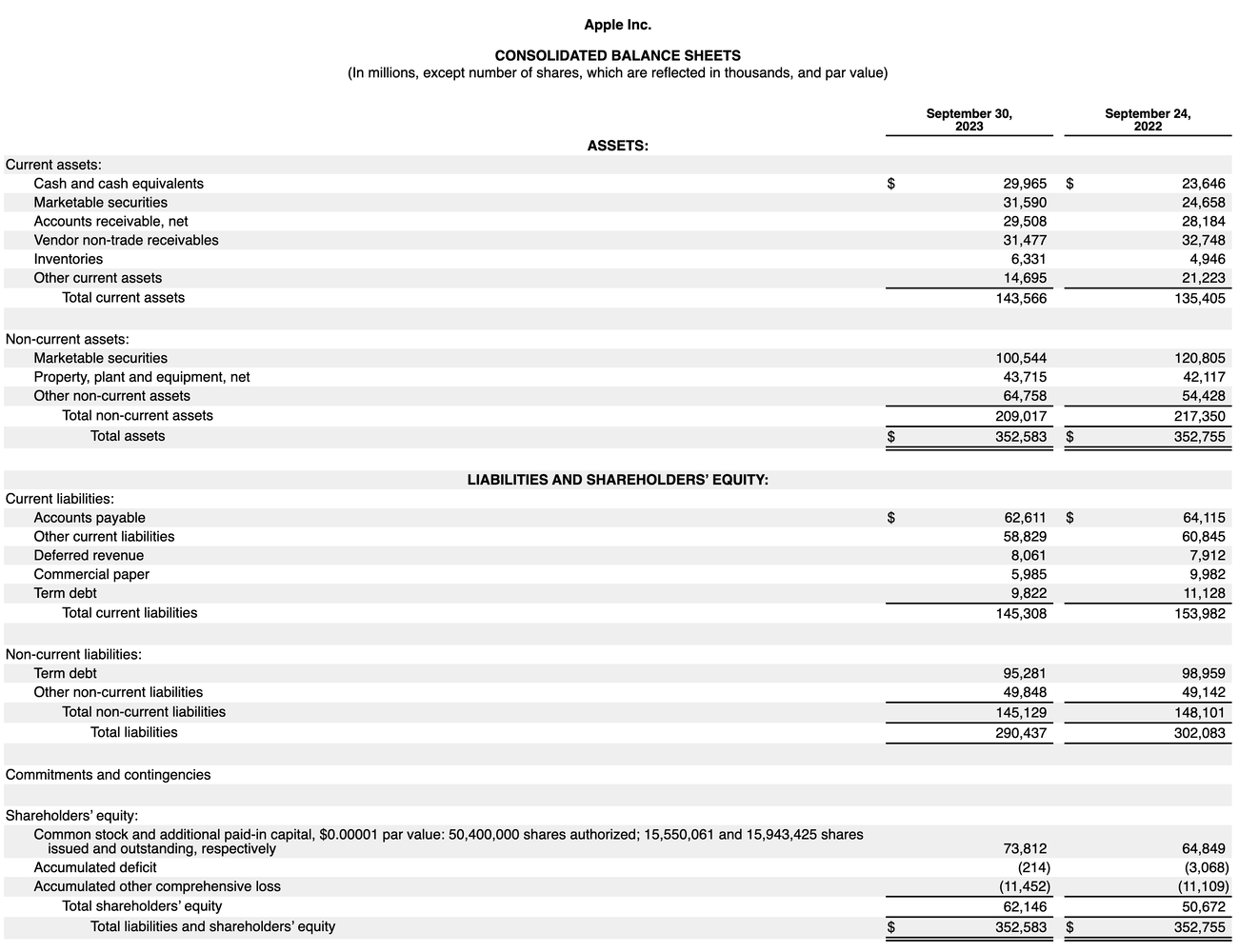
Apple Inc. has a market capitalization of $3.5 trillion, making it one of the largest companies in the world, but its balance sheet presentation is relatively simple for its size. The point is that your balance sheet doesn’t have to look complex for it to be useful.
That’s the basic overview of the balance sheet, your company’s most useful and important financial statement.